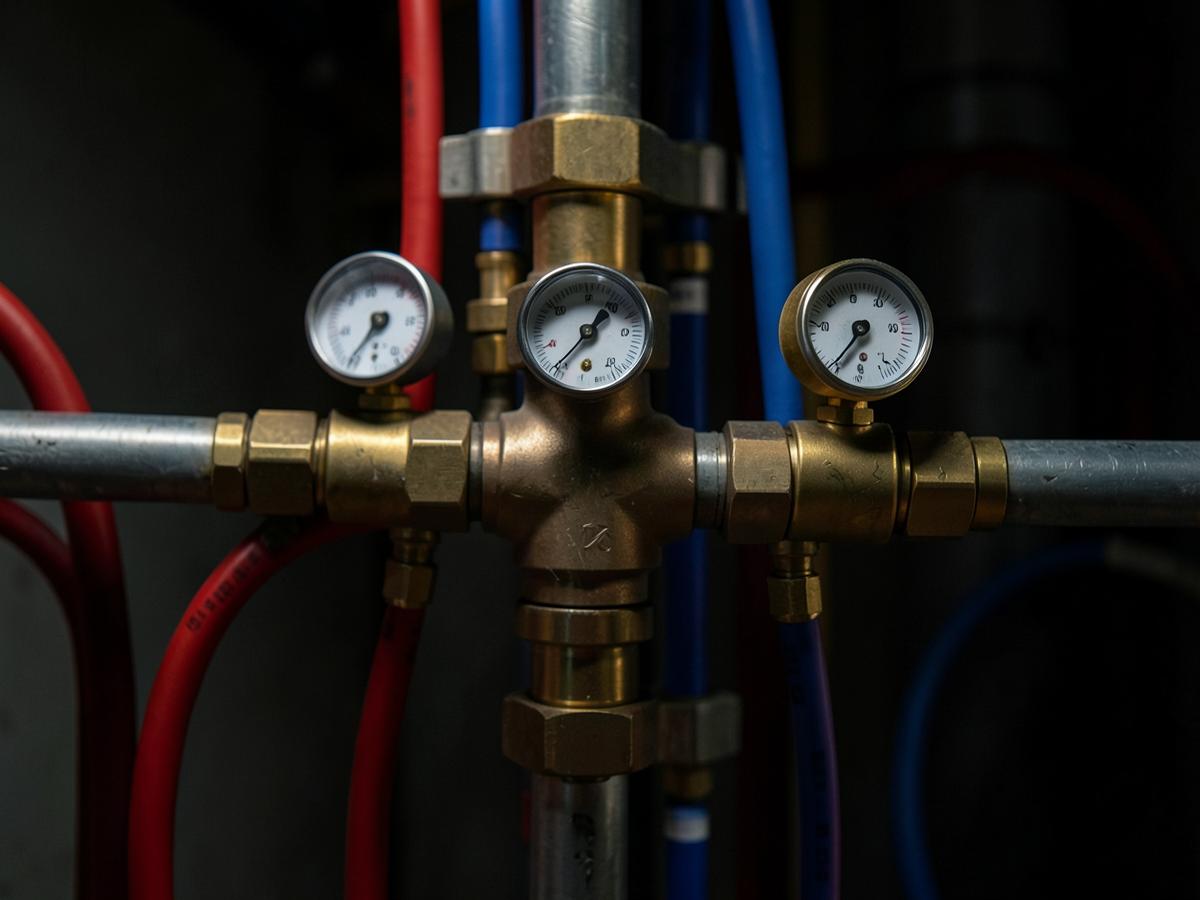
The quiet precision of water.
Boilers, manifolds, pumps and controls engineered into a single hydronic system that delivers heat exactly where it is called for.
Water carries heat far more efficiently than air, which makes hydronics a natural fit for buildings that need many zones, steady temperatures and minimal noise. Radiant floors, panel radiators, fan coils, snow melting and domestic hot water can all run from one properly designed plant.
The engineering is in the details: correct pump and pipe sizing, hydraulic separation, mixing for low-temperature loops, expansion and air management, and control logic that sequences everything sensibly. Done well, a hydronic system is almost silent and lasts a long time.
What a properly engineered system delivers
Deep zoning
Each area can hold its own setpoint without oversized equipment or duct gymnastics.
Silent operation
No air rush, no duct noise — heat moves through pipe rather than through the room.
One plant, many loads
Radiant floors, radiators, snow melt and domestic hot water can share a single, well-controlled source.
Steady comfort
Low-temperature water and outdoor reset controls smooth out the swings of on/off heating.
- Boiler installation, replacement and mechanical room rebuilds
- Radiant floor and panel radiator systems
- Multi-zone manifolds and controls
- Snow melting and pool loops
- Domestic hot water integration
- Combined hydronic and forced-air systems
Assessment
We review the building, the existing system and how the space is used, then confirm what the project actually requires.
Design
Loads are calculated and equipment, distribution, zoning and controls are selected to match the building.
Installation
Work is executed to the drawing with clean routing, correct clearances and coordination with other trades.
Commissioning
The system is started, measured and adjusted, and we walk you through operation and maintenance.
Frequently asked
Can hydronics work alongside forced air?+
Yes. A hybrid layout often uses radiant on lower levels and ducted air where cooling and ventilation are also needed.
How many zones can a system have?+
As many as the design calls for. Zoning is planned around how the building is used, then matched with correct pumping and controls.
Do hydronic systems need much maintenance?+
They need periodic attention — water quality, expansion, pumps and combustion — but a well-built system is stable and long-lived.
Let's build your comfort system.
Tell us about your project — new build, renovation, replacement or service — and we'll take it from there.